
Always Moving, Rarely Stopping: Is Your Warehouse Maintenance Keeping Up?
Forklifts, racking, dock doors and fire systems are just some of the assets that keep a distribution centre moving. When one of them stops, so does a trail of other things behind it.
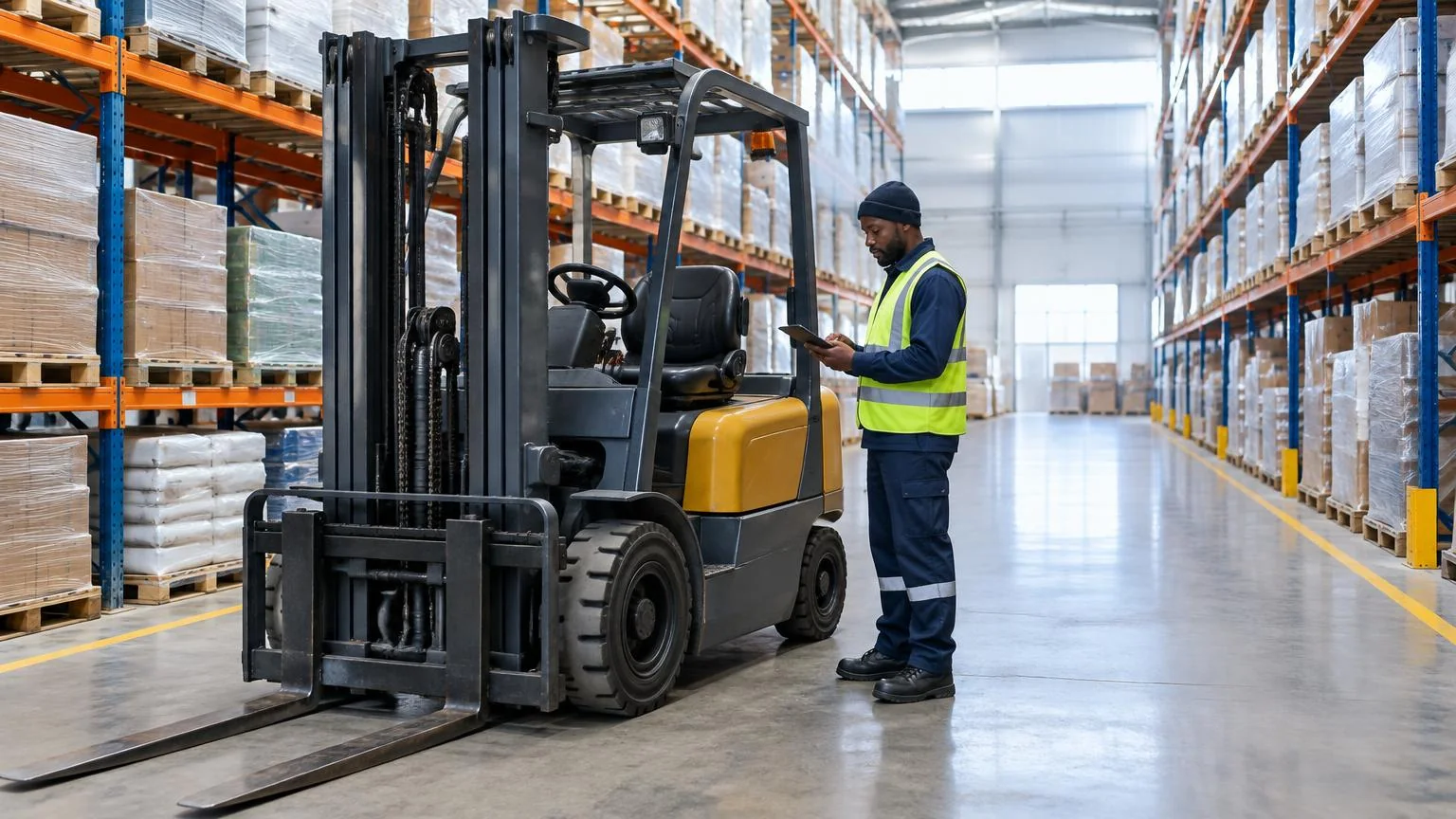
"Warehouses are dynamic environments," says Michael van Niekerk, CEO of ASP Fire. Trucks arrive and leave around the clock, pallets move in and out, orders keep coming, and peak season only turns up the pace.
In a distribution centre, standing still usually isn't an option. The equipment that keeps it moving, from forklifts and racking to dock doors, conveyors and fire systems, and everything in between, works hard every shift and rarely gets a quiet moment to be looked at.
That's exactly why maintenance and compliance can't wait for a convenient gap. And when the operation does grow or change, with higher storage, a new layout or a new product type, Van Niekerk's advice is that the site's fire protection should be reviewed too.
When the warehouse stops, everything behind it stops
A forklift that won't start. A dock leveller stuck in the up position. A roller shutter that won't close at the end of a shift. A conveyor down during a peak pick. In a distribution centre, one failure rarely stays small, because trucks, orders and people are all waiting on it.
Joshua Harvey of digital product consultancy Specno estimates that a typical warehouse or distribution centre loses between R180,000 and R250,000 for every hour of downtime.
Compliance on paper isn't compliance in practice
The Occupational Health and Safety Act, and regulations such as the Driven Machinery Regulations, apply to the lifting equipment a warehouse depends on, including forklifts. Fire protection adds its own standards, such as SANS 10400-T, SANS 10287 for sprinklers and SANS 10139 for fire detection.
Van Niekerk is clear that "a warehouse fire can escalate within minutes, particularly where there is high-rack storage", and that sprinklers, fire pumps, hydrants, detection, extinguishers and emergency lighting need routine inspection, testing and servicing by competent people. In his words: "Compliance should never be viewed as the finish line."
Elvin Harris, president of the Chartered Institute of Logistics and Transport South Africa (CILTSA), put the paperwork problem bluntly in May 2026: in many warehouses, "compliance is managed through paperwork that creates risk rather than reducing it."
What a warehouse typically needs to keep track of
- Forklifts and reach trucks: pre-use checks, services based on operating hours, load tests and operator competence
- Racking: regular visual and structural inspections, and damage that's reported and fixed
- Lifting equipment and tackle: inspections, examinations and load test certificates
- Compressors and air receivers: checks, safety valves and statutory inspections
- Fire systems: sprinklers, pumps, hydrants, hose reels, detection, extinguishers and emergency lighting
- Dock levellers, roller shutter doors, loading bays and conveyors: services and repairs
- Generators and refrigeration: services, especially where stock or cold chain depends on them
- Contractors: who did the work, and whether their certificates were valid
These are some of the key assets, but there are usually more.
The intervals depend on the equipment, the regulations and standards that apply, the manufacturer and your insurer. What doesn't change is the need to show it was done.
Many sites, many shifts, many contractors
Most logistics operators run more than one site, often around the clock. Information gets passed between shifts, spread across spreadsheets and contractor emails, and held in the heads of a few experienced people. When one of them moves on, the history of the forklift fleet or the sprinkler system can go with them.
That's when repeat failures go unnoticed, inspections slip and an audit or an insurance claim turns into a search for paperwork.
How Axario Business supports warehouse and logistics operations
- Your fleet, on record. Add forklifts, reach trucks and pallet jacks as assets with serial numbers, hour meters and a responsible person. Print QR labels and group a fleet across sites.
- Services based on hours, not guesswork. Record hour readings on the asset (even offline, or for a whole group at once), and the next service comes due when the reading passes its interval.
- A Warehouse & Logistics template pack. Start with scheduled requirements including a daily forklift pre-operation check, yearly forklift and reach-truck load tests, weekly visual, quarterly structural and yearly engineering racking inspections (referencing SANS 10367), and checks for dock levellers, roller shutter doors, loading bays and conveyors. Add the Lifting Machines & Lifting Tackle, Pressure Equipment & Air Receivers and Fire Safety packs as needed. Packs are a starting point, and it's up to you to check them against your own obligations.
- Checks on the warehouse floor. Complete inspection checklists on a phone, with photos, including your own forklift pre-use checklist. The on-site hub works offline, with scan-and-log and nearby jobs.
- Operator competence. Record staff skills backed by a licence with an expiry date, see which are expiring or expired, and set the skills a job requires.
- Every site in one place. Organise each warehouse into buildings and zones, and see downtime and repeat failures per asset.
- Spares when you need them. Keep maintenance spares with stock levels per location and reorder points, and let technicians raise parts requests.
- Contractors, kept accountable. Assign jobs to service providers, review their certificates, or send a job link they can open without logging in.
- Proof, ready to share. Build audit packs that bring certificates, inspections and jobs together as evidence, and share them by link.
To be clear about what it isn't: Axario Business isn't a warehouse management system. It doesn't track the goods you store. It looks after the equipment and compliance that keep the warehouse running.
Frequently asked questions
What maintenance records should a warehouse keep? For each site: an asset register of equipment such as forklifts, racking, dock equipment, compressors and fire systems, with pre-use checks, services, inspections, load test and inspection certificates, repairs and contractor records.
Can Axario Business track forklift hours? Yes. You record hour readings on each forklift (also offline, or for a whole group), and hour-based maintenance schedules create the next service when the reading passes the interval.
Is Axario Business a warehouse management system? No. It doesn't manage stored goods or stock of goods. It manages the equipment, maintenance, inspections and compliance that keep a warehouse running, plus the maintenance spares used to fix it.
How often should warehouse racking be inspected? The Warehouse & Logistics pack in Axario Business schedules weekly visual, quarterly structural and yearly engineering racking inspections, referencing SANS 10367. Confirm the right intervals for your site with a qualified racking inspector.
Sources
- Fire safety in warehousing and logistics protects people, products and business continuity — Engineering News / Mining Weekly, 20 October 2026
- Local warehouses face tougher fire risks as logistics operations expand — Bizcommunity, 25 September 2026
- South Africa's warehousing sector faces a digital crossroads — Engineering News, 6 May 2026
- Specno specialists warn of digital warehousing risks — Lifestyle & Tech, 16 February 2026
- Holistic approach required for forklift safety — Cape Business News, 12 June 2025