

You’ve invested in solar. Do you know if your investment is properly covered?
Solar is a major investment. SAIA's Safe Solar, Secure Homes campaign explains why installation compliance and records matter for insurance. Here's how to protect your investment.
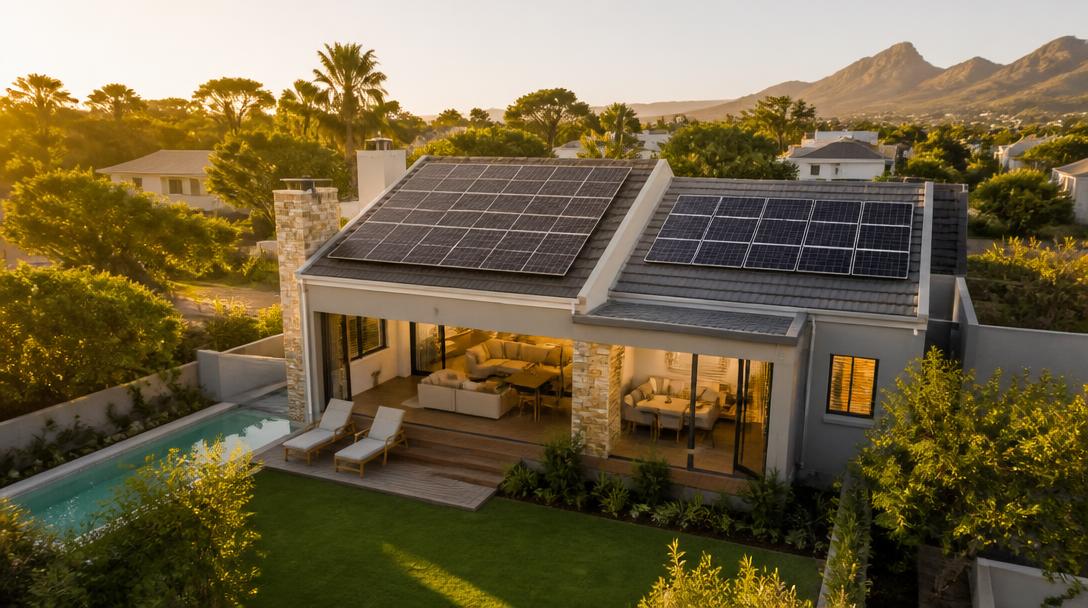
Solar has become part of thousands of South African homes.
For many homeowners, it is also one of the biggest investments they've made in their property — often involving solar panels, batteries, an inverter and electrical work worth a substantial amount of money.
You would therefore expect the insurance side to be fairly straightforward.
Install it. Tell your insurer. Make sure it's covered.
Except there may be a little more to it than that.
In March 2026, the South African Insurance Association (SAIA) launched its Safe Solar, Secure Homes campaign specifically to raise awareness around the safe and compliant installation of residential solar systems.
Its warning was worth paying attention to.
SAIA highlighted that improperly installed or non-compliant solar systems can create risks ranging from electrical fires and property damage to the potential rejection of insurance claims.
That changes the conversation slightly.
Because it isn't only about whether your solar system appears on your insurance policy. How it was installed, whether the installation is compliant and whether you have the records to support that can matter too.
The paperwork you didn't think you'd need again
A Certificate of Compliance is a good example.
When a solar installation is completed, the paperwork that comes with it can feel like the least interesting part of the entire exercise. You have just spent a considerable amount of money improving your home; the certificate gets filed away (or misplaced along the way without you even being aware) and life moves on.
But SAIA specifically advises homeowners to obtain a valid Certificate of Compliance from a registered electrical contractor. It also points to municipal registration requirements and the importance of notifying your insurer about the installation.
These aren't simply administrative formalities.
They form part of the history of an installation that could remain attached to your home for many years.
And that history grows.
Perhaps an inverter is replaced three years later. A battery is added. Another installer expands the system. A component fails under warranty. The property is sold. Your insurer changes. The original installation company no longer exists.
Suddenly the invoice you received five years ago, the model number of a battery, an old warranty or the certificate you put somewhere “safe” becomes considerably more relevant.
Insurance doesn't make the underlying responsibilities disappear
This is probably the most important point in SAIA's warning.
We often think of insurance as protection for the unexpected — and of course, that is exactly what it is designed to provide.
But an insurance policy doesn't necessarily make the condition, installation or compliance of the insured property irrelevant.
The circumstances of every claim and the wording of every policy are different, so a missing document or compliance issue does not automatically mean a claim will be rejected.
However, SAIA's decision to specifically warn South African homeowners about the potential insurance consequences of non-compliant solar installations is significant.
It means there is another side to protecting a major household investment.
There is insuring it.
And there is being able to demonstrate that it was installed and managed properly.
Solar systems don't stay frozen in time
There is another reason the information matters.
The solar installation you have today may not be the solar installation you have five or ten years from now.
Technology changes. Batteries reach the end of their useful lives. Components are upgraded. Installers perform repairs. Warranties expire. Ownership of the property may change.
The physical system evolves, but the information around it often doesn't evolve with it.
Instead, pieces of its history end up scattered across email inboxes, WhatsApp conversations, paper files, photographs and folders on different devices.
We generally don't notice that fragmentation because there is no reason to go looking for any of it.
Until there is.
A warranty claim.
An insurance claim.
A fault.
A new installer trying to understand work completed by someone else.
Or a prospective buyer asking for information about the solar installation included with the property.
At that point, the value isn't simply in having kept a document somewhere.
It's in being able to find the right information and understand what it relates to.
Our homes now have surprisingly complicated histories
Solar is a particularly good example, but it is part of something much bigger happening inside our homes.
Modern households contain increasingly valuable assets and systems, each accumulating its own trail of information.
An appliance comes with a receipt and warranty. A vehicle develops a service and repair history. A renovation produces quotations, invoices and contractor details. Insurance policies change over time. Home improvements may have tax implications years after they were completed.
Most of these records are created at completely different moments, by completely different people, and stored in completely different places.
We tend to think about managing the physical things we own.
We think much less about managing the information that belongs to them.
Yet sometimes the information is what allows us to protect the value of the thing itself.
Your solar system has a history. Keep it.
The interesting part of SAIA's warning isn't simply that homeowners should install solar safely.
It's a reminder that owning something doesn't end when we buy it.
Some of the information we receive at the beginning of that ownership may only prove its value years later.
The Certificate of Compliance you barely looked at.
The invoice from the installer.
The warranty for the inverter.
The details of the company that completed the work.
The record of a repair or upgrade.
None of it feels particularly urgent when everything is working as it should.
But “I'll keep that somewhere safe” has a habit of becoming “I'm sure we have it somewhere.”
And when the information matters, somewhere isn't particularly helpful.
Keeping the history connected
This is one of the reasons we built Axario Home.
Not simply to store documents, but to help keep the information surrounding your home and the things you own connected.
A solar installation can sit with its purchase information, documents, warranties, insurance details, maintenance history, installer and reminders rather than those pieces living independently in different places.
The same principle applies to the rest of the home.
Because the things we own accumulate histories.
And those histories are worth keeping.
Sources
This article provides general information and is not legal, financial or insurance advice. Please consult a qualified professional about your own circumstances.