
Your Home Has a Life Story, But You Don't Have to Carry Its Baggage.
Your home holds a lifetime of useful details. Keep the things, people and memories connected, without carrying it all in your head.
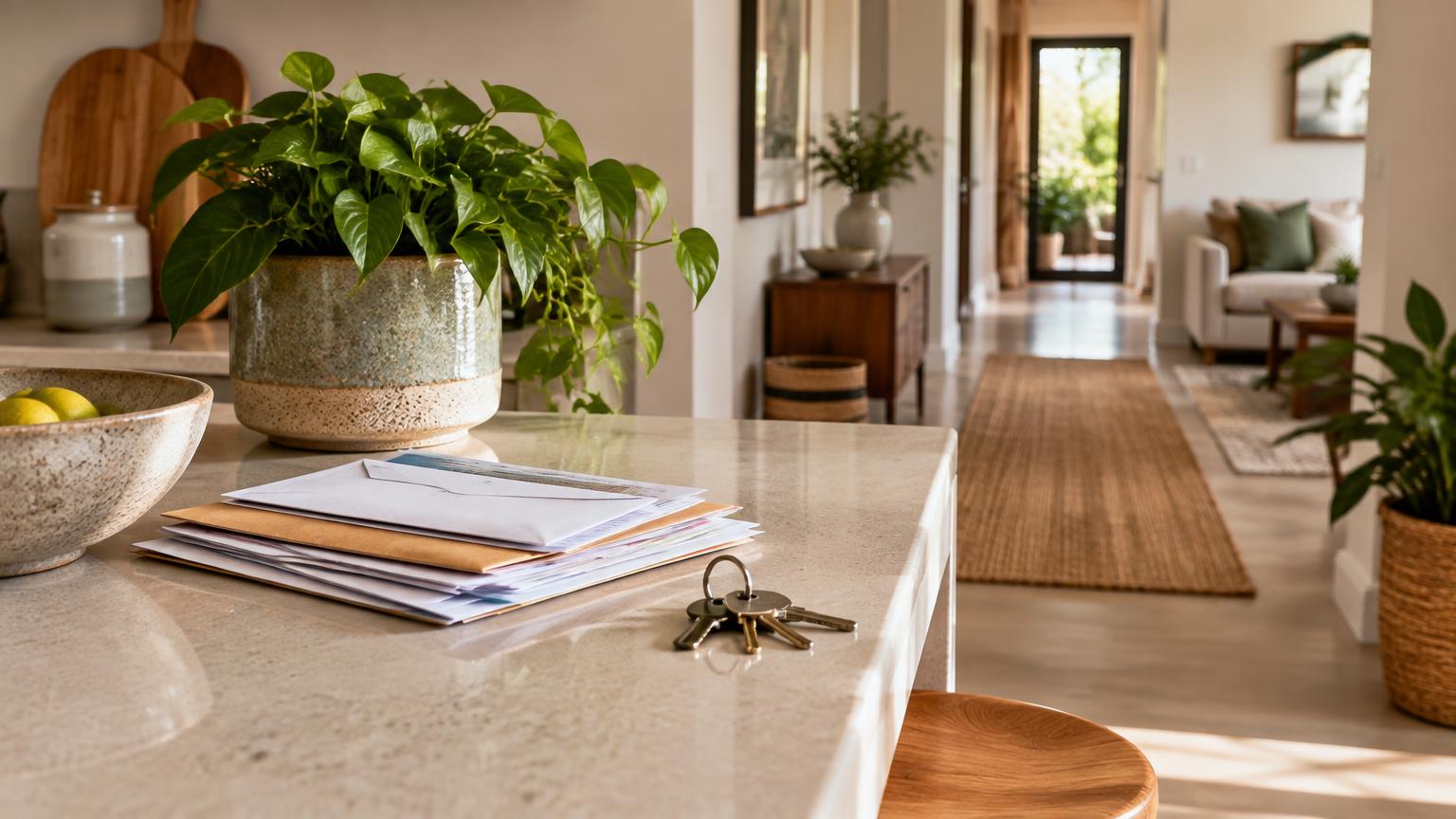
Our homes start out relatively simple. You move in. You unpack. You find somewhere for the keys. You work out which cupboard has the cleaning products. And then life continues.
You buy a washing machine. Install solar. Replace a geyser. Get an alarm. Add a pet. Have children. Renovate the kitchen. Change insurance. Get a new car. Find a plumber you trust. Renew a warranty. Replace a battery. Put a spare set of keys somewhere safe.
And before you know it, your home has accumulated a life story. Some may call it 'baggage'.
Not the emotional kind. Although, depending on the renovation or home related challenge, there may be some of that too.
We're talking about the practical baggage kind that our homes accumulate: receipts, warranties, certificates, manuals, service histories, insurance information, maintenance dates, contact details, photographs, important documents and all those little pieces of information that seemed insignificant when they arrived, but suddenly become very important when you need them.
The problem is that most of us carry much of this information around in our heads. Or in an inbox. Or in a drawer. Or in a WhatsApp conversation from three years ago. Or in a folder called Important Stuff that contains approximately 417 other things.
The invisible work of running a home
There is a lot more to running a home than the things we see. There is the visible work: cleaning, fixing, shopping, cooking, gardening, organising. And then there is the invisible work.
Remembering when the geyser was last serviced. Knowing where the electrical compliance certificate is. Finding the receipt for the appliance that has just stopped working. Remembering which company installed the solar system. Knowing when the car licence and insurance are due. Keeping track of the dog's vaccination records. Knowing which contractor did the work on the roof. Remembering that the washing machine still has a warranty. Finding the details of the person who looks after the garden when you're away. And, perhaps most importantly, knowing where the important information is if someone else needs it.
None of these things individually feels like a big deal. It's the accumulation that becomes heavy. We're already carrying enough. Life is already super busy. We don't need to add more.
So what is actually worth keeping?
The answer isn't everything.
You don't need to create a museum archive of your home's history.
But there are certain things that are genuinely useful to have together, connected to the thing they belong to, and easy to find when you need them.
1. Know what you have
Start with the things that matter.
Your appliances. Electronics. Furniture. Tools. Vehicles. Solar equipment. Generators. Security systems. Garden equipment. Anything valuable, important or difficult to replace. You don't necessarily need a detailed inventory of every fork and cushion.
Think instead about the things you might need to:
repair, replace, insure, sell, claim on, maintain or prove you own.
A photo, purchase date, receipt and warranty can be surprisingly useful later.
And if something has a serial number, model number or other identifying detail, that's worth capturing too.
2. Keep the paperwork with the thing
A receipt sitting in your email isn't particularly useful if you can't remember which appliance it belongs to.
The same goes for warranties, manuals, certificates and installation documents.
When information is connected to the thing it relates to, it becomes much easier to use.
The solar installation documents belong with the solar system. The service history belongs with the vehicle. The warranty belongs with the appliance. The insurance document belongs with the property or item it covers. It sounds obvious. But most of our information systems don't work that way.
3. Keep a little history
You don't need to document every moment of your home's existence. But a simple history can be incredibly valuable.
When was the roof repaired? When was the geyser replaced? Who installed the air conditioning? When was the pool pump serviced? What work was done during the renovation? What did that appliance cost? When was the last electrical inspection?
A few years from now, these details can save a surprising amount of time — and sometimes money. They can also help you make better decisions about what needs attention next.
4. Don't forget the people
A home isn't just things. There are people connected to it too. Family members. Children. Parents. Pets. Household staff. Trusted professionals. Emergency contacts.
There may be information that someone else needs to know if you're away or unavailable. Who looks after the pets? Who has a spare key? Who services the alarm? Who is the plumber you normally call? Where are the important documents? Who should be contacted in an emergency? These aren't things we like to think about every day. Which is precisely why it's useful to have them recorded somewhere reliable.
5. Make maintenance work for you
Maintenance is one of those things that is easy to ignore when everything is working. Until it isn't.
Some things need regular attention: air conditioners, pools, generators, solar systems, vehicles, security systems, appliances and equipment around the home.
The trick isn't to remember all of these dates yourself. It's to capture them once and let something remind you. That distinction matters.
Organisation should reduce mental load, not create another list of things to manage.
6. Think beyond the emergency
We often only think about our household information when something goes wrong. A storm damages the roof. A pipe bursts. An appliance stops working. A car is involved in an accident. Someone needs to make an insurance claim.
That's when suddenly you need the receipt, the photographs, the policy, the service history, the contractor's details and the date the work was done.
Having that information beforehand can make a stressful situation considerably easier to deal with. But the value isn't only in emergencies.
It can help when you're budgeting, renovating, selling, moving, reviewing insurance or simply trying to work out what needs attention around the house.
Your home shouldn't become another project
This is where the idea of "getting organised" can go slightly wrong. Because the last thing most households need is another project.
Another spreadsheet. Another folder structure. Another app that requires constant updating. Another list that quietly becomes another source of guilt. The point isn't to become better at household administration. The point is to do less of it.
Capture useful information when it happens. Connect it to the right thing. Set a reminder when something genuinely needs attention. Then let the system hold onto it.
That way, when you need something six months or six years later, you're not relying on your memory.
Your home already has a memory
Every home has one.
It's in the marks on the wall, the renovation photographs, the receipt in the drawer, the appliance that has been repaired twice, the tree you planted, the car you've owned for years, the contractor whose number you've saved under "Dave — roof guy" and the documents you've accumulated along the way.
The problem isn't that the information doesn't exist. It's that it's scattered. And when information is scattered, we become the connection between it all.
We remember which document belongs to which appliance. We remember who did the work. We remember when something needs to be renewed. We remember where we put the receipt. We remember what happened last time. That's a lot of invisible work.
Let your home remember for you
That's the thinking behind Axario Home.
It's not about turning your home into a spreadsheet. It's about giving all the useful information that already exists around your home somewhere to live — and connecting it to the things, people and responsibilities it belongs to.
Your appliance can have its purchase information, receipt, warranty and service history. Your vehicle can have its documents, costs, reminders and maintenance information. Your property can have its important records, professionals and history. Important people, pets and responsibilities can have their own information too. And when something needs your attention, you can be reminded — rather than relying on your brain to remember it.
Because there is a difference between being organised and having to organise everything yourself. The first can be useful. The second is exhausting. Your home has a life story. You don't have to carry all its baggage.
Let it remember for you.
Axario Home — Your digital memory for the modern home.
Related reading: What You'd Actually Need to Prove After a Break-In or a Burst Geyser and Would Your Family Know Where to Find Your Important Information?.