
Insured, but not necessarily covered?
Premiums are paid and policies are renewed — but when something goes wrong, can you show how the asset was installed, maintained and kept compliant? Why the operational history behind an insured asset can matter as much as the policy itself.
There is a certain reassurance that comes with knowing your business is insured.
Buildings, equipment, solar installations and other assets are covered. Premiums are paid. Policies are renewed. Insurance sits quietly in the background, there for the day something unfortunate happens.
But insurance and operational responsibility are not the same thing.
When a serious loss occurs, the conversation can move beyond what was damaged and what it will cost to replace. How an asset was installed, whether it complied with the relevant standards, whether the contractor was indeed certified, how it was maintained and whether the business can demonstrate that those responsibilities were met can suddenly become very important.
A recent South African court case illustrates just how complicated that can become.
Biovac's Cape Town premises were damaged by a fire in 2021. The company was insured, but Guardrisk repudiated its portion of the claim. Years later, aspects of that dispute reached the Gauteng High Court, where electrical Certificates of Compliance became one of the issues under consideration.
The eventual judgment does not support the simplistic conclusion that a missing certificate automatically invalidates an insurance claim. Far from it. The wording of the policy, the circumstances of the loss and the conduct of the insured all mattered.
But the case exposes something businesses don't necessarily think about when everything is running normally.
Operational records that seem relatively unremarkable today can become extremely important in the case that something goes wrong.
That issue is becoming particularly relevant as South African businesses invest heavily in solar.
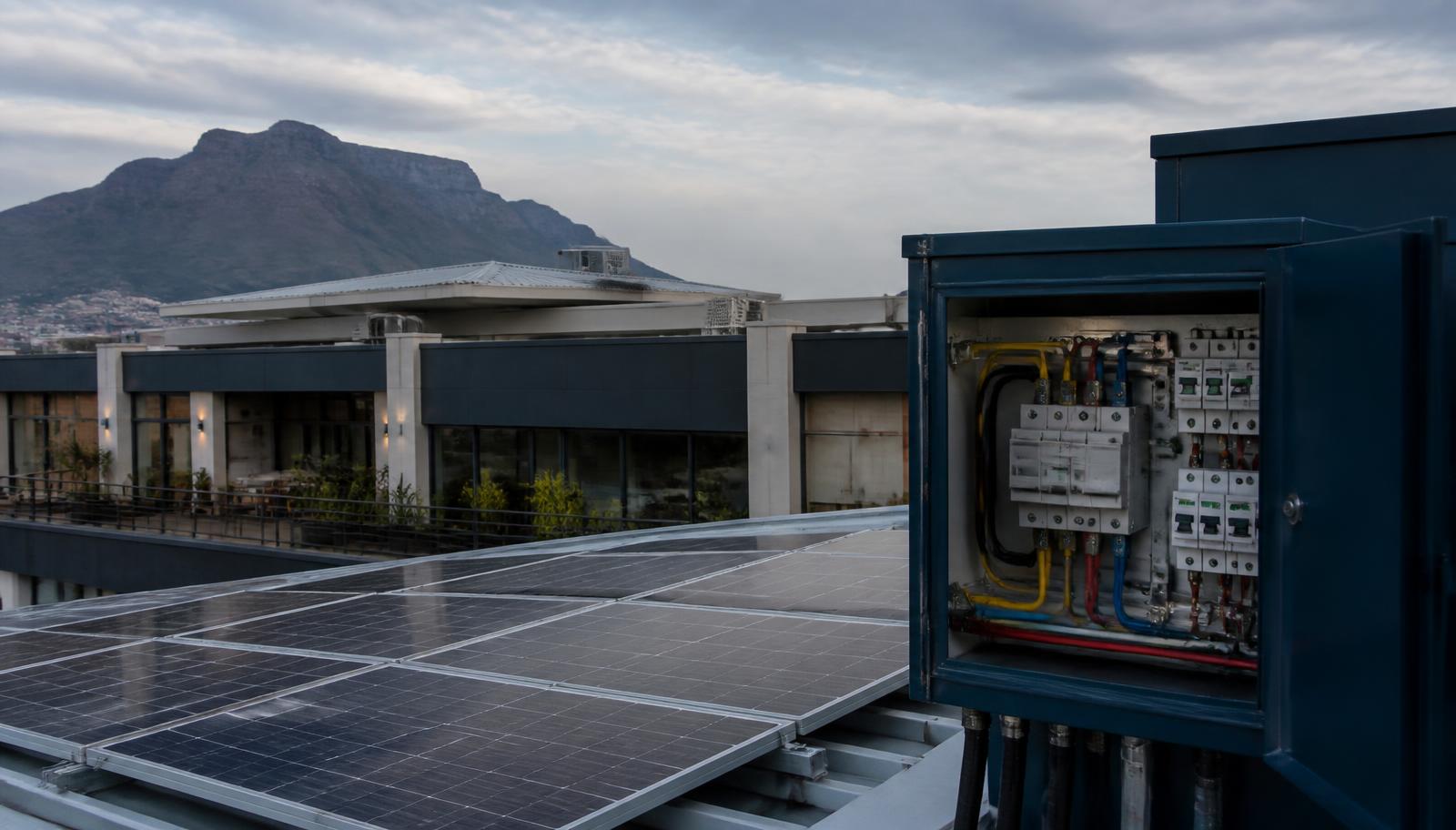
In 2026, both the South African Insurance Association and industry experts warned about the insurance risks associated with non-compliant solar installations. Questions around installation standards, electrical compliance, declared asset values and ongoing maintenance are no longer merely technical matters. They can have implications for the way risk is assessed and, in some circumstances, how a claim is treated.
And solar is only one example.
The same principle runs through buildings, machinery, electrical infrastructure, fire-protection equipment and many of the physical assets businesses rely on every day.
The interesting question, therefore, isn't simply whether an organisation has insurance.
It's whether the operational history behind the insured asset exists, and can be shown when somebody eventually needs to see it.
That history is rarely created in one dramatic moment. It accumulates quietly over years — through maintenance, inspections, repairs, certificates, contractor work, renewals and decisions made along the way.
When those activities are properly recorded, they create something more valuable than administrative paperwork.
They create evidence.
Keeping the history connected
This is one of the reasons we built Axario Business.
Not simply to store documents, but to keep the information behind your assets, maintenance, compliance and contractors connected as part of one traceable operational history.
An asset can sit alongside its maintenance records, inspections, certificates, contractor activity, costs and supporting documentation — rather than that evidence being scattered across spreadsheets, inboxes, shared drives and filing systems.
Because when something goes wrong, knowing the work was done may not be enough.
Being able to prove it could matter.